ผลิตภัณฑ์
19
Jan
การจัดสรรหน่วยความจำแบบสแต็กเทียบกับฮีป
การทำความเข้าใจหน่วยความจำแบบสแต็กและฮีปถือเป็นสิ่งสำคัญสำหรับการเขียนโปรแกรมที่มีประสิทธิภาพและเชื่อถือได้

ในภาษา C, C++ และ Java หน่วยความจำสามารถจัดสรรได้ทั้งในรูปแบบสแต็กหรือฮีปการจัดสรรแบบสแต็กเกิดขึ้นในสแต็กการเรียกฟังก์ชันโดยแต่ละฟังก์ชันจะได้รับหน่วยความจำของตัวเองสำหรับตัวแปร ในภาษา C/C++ หน่วยความจำแบบฮีปนั้นถูกควบคุมโดยโปรแกรมเมอร์ เนื่องจากไม่มีการเก็บขยะอัตโนมัติ
การจัดสรรสแต็ก
การจัดสรรหน่วยความจำแบบ Stack หมายถึงกระบวนการจัดสรรหน่วยความจำให้กับตัวแปรโลคอลและการเรียกฟังก์ชันในCall Stackกระบวนการนี้เกิดขึ้นโดยอัตโนมัติเมื่อมีการเรียกฟังก์ชัน และจะถูกปล่อยคืนทันทีเมื่อฟังก์ชันสิ้นสุดลง เนื่องจากระบบเป็นผู้จัดการหน่วยความจำ จึงรวดเร็วและมีประสิทธิภาพแต่มีพื้นที่จำกัดเมื่อเทียบกับการจัดสรรหน่วยความจำแบบ Heap หากมีการเรียกฟังก์ชันมากเกินไปจนเกินความจุของ Stack จะทำให้เกิด ข้อผิด พลาดStack Overflow
วิธีการทำงานของการจัดสรรสแต็ก
- หน่วยความจำจะถูกจัดสรรเป็นบล็อกต่อเนื่องกันภายใน สแต็ กการเรียก
- ขนาดของหน่วยความจำที่ต้องการนั้นทราบอยู่แล้วก่อนเริ่มการทำงาน
- เมื่อมีการเรียกใช้ฟังก์ชันตัวแปรโลคอล ของฟังก์ชัน นั้นจะถูกจัดสรรบนสแต็ก
- เมื่อฟังก์ชันทำงานเสร็จสิ้นหน่วยความจำที่จัดสรรไว้จะ ถูกปล่อย คืนโดยอัตโนมัติ
- โปรแกรมเมอร์ไม่จำเป็นต้องจัดการเรื่องการจัดสรรหรือการยกเลิกการจัดสรรหน่วยความจำ
- เนื่องจากหน่วยความจำแบบสแต็กจะถูกปล่อยเมื่อฟังก์ชันทำงานเสร็จสิ้น จึงเรียกอีกอย่างว่าการจัดสรรหน่วยความจำชั่วคราว
คุณสมบัติหลักของการจัดสรรสแต็ก
- หน่วยความจำจะใช้งานได้เฉพาะขณะที่ฟังก์ชันกำลังทำงานอยู่เท่านั้น
- การจัดสรรหน่วยความจำจะถูกยกเลิกโดยอัตโนมัติเมื่อฟังก์ชันสิ้นสุดลง
- หากหน่วยความจำสแต็กเต็ม จะเกิด ข้อผิดพลาด เช่นJava.lang.StackOverflowErrorในภาษา Java และ segmentation fault ในภาษา C++
- ปลอดภัยกว่าหน่วยความจำแบบฮีป เนื่องจากข้อมูลสามารถเข้าถึงได้โดยเธรดที่เป็นเจ้าของเท่านั้น
- เร็วกว่าการจัดสรรหน่วยความจำแบบฮีป เนื่องจากมีการจัดการหน่วยความจำอัตโนมัติ
ตัวอย่างโค้ด:
int main() {

  // All these variables get memory
  // allocated on stack
  int a;
  int b[10];
  int n = 20;
  int c[n];
}
การจัดสรรฮีป
หน่วยความจำฮีปจะถูกจัดสรรแบบไดนามิกในระหว่างการทำงานของโปรแกรม แตกต่างจากหน่วยความจำสแต็กหน่วยความจำฮีปจะไม่ถูกปล่อยโดยอัตโนมัติเมื่อฟังก์ชันสิ้นสุดลง แต่จะต้องมีการปล่อยหน่วยความจำด้วยตนเอง (ในภาษา C/C++)หรือใช้ตัวเก็บขยะ (ในภาษา Java หรือ Python)เพื่อเรียกคืนหน่วยความจำที่ไม่ได้ใช้งาน
ชื่อ"ฮีป"ไม่ได้มีความเกี่ยวข้องกับโครงสร้างข้อมูลแบบฮีปแต่อย่างใด มันหมายถึงเพียงแค่กลุ่มหน่วยความจำขนาดใหญ่ที่พร้อมสำหรับการจัดสรรแบบไดนามิกเมื่อใดก็ตามที่มีการสร้างวัตถุ วัตถุ นั้นจะถูกจัดเก็บไว้ใน หน่วยความจำฮีปในขณะที่การอ้างอิงถึงวัตถุเหล่านั้นจะถูกจัดเก็บไว้ในหน่วยความจำสแต็กการจัดสรรหน่วยความจำแบบฮีปมีความปลอดภัยน้อยกว่าการจัดสรรแบบสแต็ก เนื่องจากข้อมูลในฮีปสามารถเข้าถึงได้โดยหลายเธรดซึ่งเพิ่มความเสี่ยงต่อการเสียหายของข้อมูลและการรั่วไหลของหน่วยความจำหากไม่ได้รับการจัดการอย่างเหมาะสม
ประเภทของหน่วยความจำฮีป
หน่วยความจำฮีปถูกแบ่งออกเป็นสามประเภท ซึ่งช่วยในการจัดลำดับความสำคัญของการจัดเก็บวัตถุและการเก็บขยะ :
- เจเนอเรชั่นใหม่ – ใช้เก็บวัตถุใหม่เมื่อพื้นที่นี้เต็ม วัตถุที่ไม่ได้ใช้งานจะถูกกำจัดออกโดยตัวเก็บขยะและวัตถุที่เหลืออยู่จะย้ายไปยัง เจเนอเรชั่ นเก่า
- รุ่นเก่า (ที่คงอยู่) – เก็บวัตถุเก่าที่ไม่ค่อยได้ใช้งานแล้ว วัตถุเหล่านี้จะยังคงอยู่ในหน่วยความจำจนกว่าจะถูกลบออกอย่างชัดเจน
- หน่วยความจำถาวร (PermGen) – ใช้สำหรับจัดเก็บข้อมูลเมตาของ JVMเช่นคลาสรันไทม์และเมธอดของแอปพลิเคชัน
คุณลักษณะสำคัญของการจัดสรรฮีป
- หากหน่วยความจำฮีปเต็ม JVM จะแสดงข้อผิดพลาด: java.lang.OutOfMemoryError
- ต่างจากหน่วยความจำแบบสแต็ก หน่วยความจำแบบดิสคัฟเวอรี่จะไม่ถูกจัดสรรโดยอัตโนมัติจำเป็นต้องใช้ตัวเก็บขยะเพื่อปลดปล่อยหน่วยความจำที่ไม่ได้ใช้งาน
- ช้ากว่าหน่วยความจำแบบ Stack เนื่องจากมี การจัดสรรหน่วยความจำ และการเก็บขยะด้วยตนเอง
- มีความปลอดภัยต่อการทำงานแบบมัลติเธรดน้อยกว่าเนื่องจากหน่วยความจำฮีปถูกใช้ร่วมกันโดยทุกเธรด
- โดยทั่วไปจะมีขนาดใหญ่กว่าเมื่อเทียบกับหน่วยความจำแบบสแต็ก
- หน่วยความจำฮีปจะคงอยู่ตราบเท่าที่แอปพลิเคชันทั้งหมดกำลังทำงานอยู่
ตัวอย่างโค้ด:
int main()
{
   // This memory for 10 integers
   // is allocated on heap.
   int *ptr  = new int[10];
}
เพื่อทำความเข้าใจความแตกต่างระหว่างการจัดสรรหน่วยความจำแบบสแต็กและฮีปโดยสังเกตวิธีการสร้างและจัดการวัตถุในทั้งสองกรณี โดยใช้คลาสEmpสำหรับจัดเก็บรายละเอียดพนักงาน
ด้านล่างนี้คือตัวอย่างการใช้งาน:
C++
#include <bits/stdc++.h>
using namespace std;

class Emp {
public:
    int id;
    string emp_name;

    // Constructor to initialize employee details
    Emp(int id, string emp_name) {
        this->id = id;
        this->emp_name = emp_name;
    }
};

// Function to create and return an Emp object
Emp Emp_detail(int id, string emp_name) {
    return Emp(id, emp_name);
}

int main() {
    // Initializing employee details
    int id = 21;
    string name = "Maddy";

    // Creating an Emp object using the function
    Emp person_ = Emp_detail(id, name);

    return 0;
}
Java
class Emp {
    int id;
    String emp_name;

    public Emp(int id, String emp_name) {
        this.id = id;
        this.emp_name = emp_name;
    }
}

public class Emp_detail {
    private static Emp Emp_detail(int id, String emp_name) {
        return new Emp(id, emp_name);
    }

    public static void main(String[] args) {
        int id = 21;
        String name = "Maddy";
        Emp person_ = null;
        person_ = Emp_detail(id, name);
    }
}
Python
class Emp:
    # Constructor to initialize employee details
    def __init__(self, id, emp_name):
        self.id = id
        self.emp_name = emp_name

# Function to create and return an Emp object
def Emp_detail(id, emp_name):
    return Emp(id, emp_name)

if __name__ == "__main__":
    # Initializing employee details
    id = 21
    name = "Maddy"

    # Creating an Emp object using the function
    person_ = None
    person_ = Emp_detail(id, name)
JavaScript
class Emp {
    // Constructor to initialize employee details
    constructor(id, emp_name) {
        this.id = id;
        this.emp_name = emp_name;
    }
}

// Function to create and return an Emp object
function Emp_detail(id, emp_name) {
    return new Emp(id, emp_name);
}

// Initializing employee details
let id = 21;
let name = "Maddy";

// Creating an Emp object using the function
let person_ = null;
person_ = Emp_detail(id, name);
จากตัวอย่างข้างต้น เราสามารถสรุปได้ดังนี้:
- การจัดสรรหน่วยความจำฮีป:
- เมื่อโปรแกรมเริ่มต้นทำงาน คลาสรันไทม์ทั้งหมดจะถูกจัดเก็บไว้ในหน่วยความจำฮีป
- การจัดสรรหน่วยความจำแบบ Stack:
- เมธอดหลักจะถูกเก็บไว้ในหน่วยความจำแบบสแต็ก พร้อมกับตัวแปรโลคอลและตัวแปรอ้างอิงของมัน
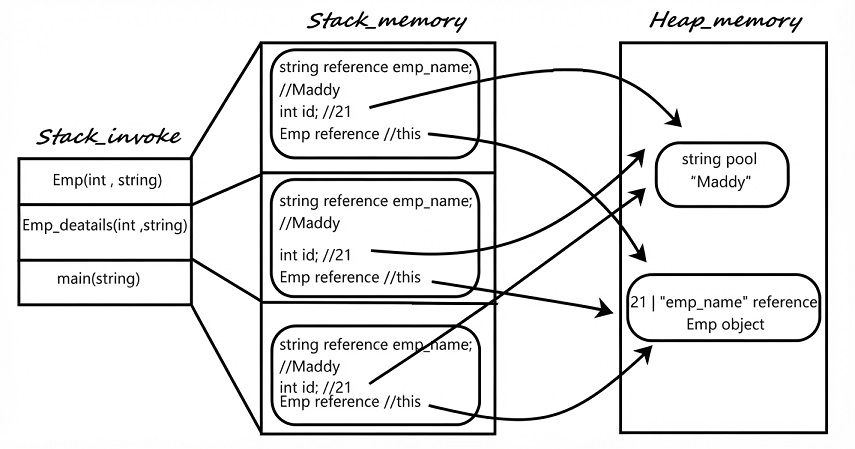
- ตัวแปรอ้างอิง Emp ชนิด Emp_detail ถูกเก็บไว้ในสแต็กและชี้ไปยังอ็อบเจ็กต์ที่เกี่ยวข้องในหน่วยความจำฮีป
- การเรียกใช้ Constructor และการจัดสรรหน่วยความจำ :
- คอนสตรัคเตอร์แบบมีพารามิเตอร์ Emp(int, string) จะถูกเรียกใช้จากฟังก์ชัน main และการทำงานของมันจะถูกจัดสรรไว้ที่ด้านบนสุดของสแต็ก
- ภายในคอนสตรัคเตอร์: การอ้างอิงวัตถุจะถูกเก็บไว้ในหน่วยความจำแบบสแต็ก ตัวเลขจำนวนเต็มพื้นฐาน id จะถูกเก็บไว้ในหน่วยความจำแบบสแต็ก และการอ้างอิงสตริง emp_name จะถูกเก็บไว้ในหน่วยความจำแบบสแต็ก แต่จะชี้ไปยังสตริงจริงที่เก็บไว้ในพูลสตริง (หน่วยความจำแบบฮีป)
- การเรียกใช้ฟังก์ชันและการจัดสรรหน่วยความจำ:
- เมื่อมีการเรียก Emp_detail() จากฟังก์ชัน main ระบบจะสร้าง stack frame ใหม่ทับซ้อนกับ stack frame ก่อนหน้า
- อ็อบเจ็กต์ Emp ที่สร้างขึ้นใหม่และตัวแปรอินสแตนซ์ทั้งหมดจะถูกจัดเก็บไว้ในหน่วยความจำฮีป
ภาพประกอบแสดงดังแผนภาพด้านล่าง:
ความแตกต่างที่สำคัญระหว่างการจัดสรรหน่วยความจำแบบ Stack และ Heap
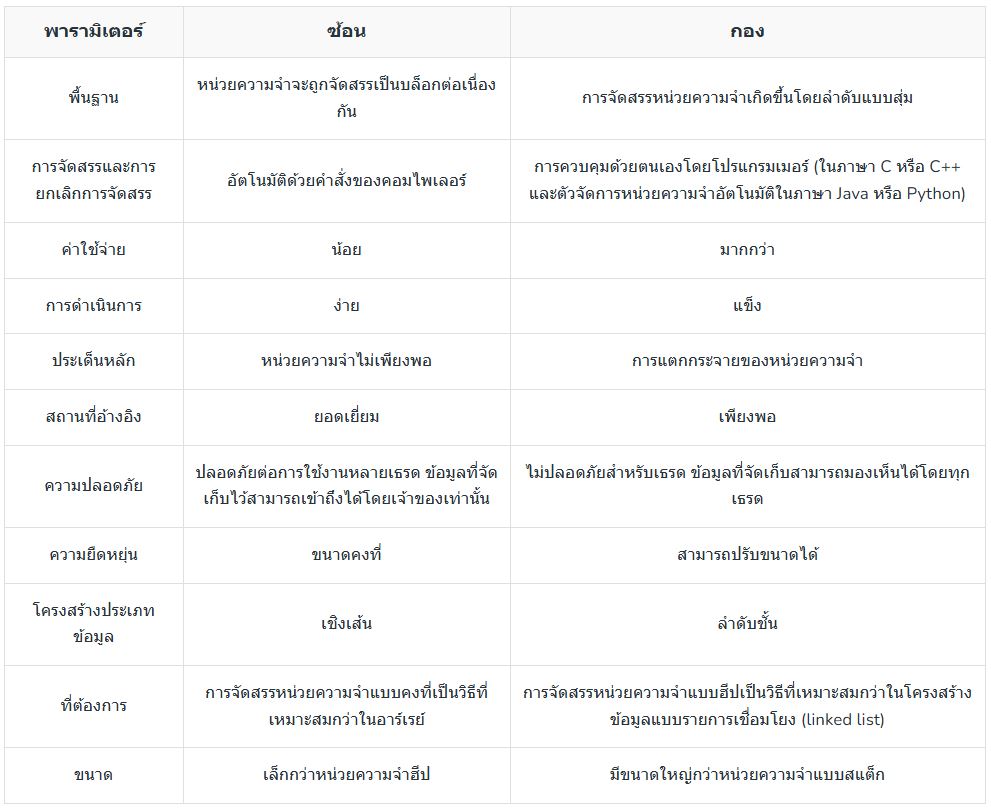
- ในโครงสร้างข้อมูลแบบสแต็ก การจัดสรรและการยกเลิกการจัดสรรจะ ดำเนินการ โดยอัตโนมัติโดยคอมไพเลอร์ ในขณะที่ในโครงสร้างข้อมูลแบบฮีป โปรแกรมเมอร์ต้องดำเนินการด้วยตนเอง
- การจัดการเฟรมฮีปนั้นมีค่าใช้จ่ายสูงกว่าการจัดการเฟรมสแต็ก
- ปัญหา การขาดแคลนหน่วยความจำมักเกิดขึ้นในหน่วยความจำแบบสแต็ก ในขณะที่ปัญหาหลักในหน่วยความจำแบบฮีปคือการแตกตัวของหน่วยความจำ (fragmentation)
- การเข้าถึงเฟรมสแต็ก นั้นง่าย กว่าเฟรมฮีป เนื่องจากสแต็กมีพื้นที่หน่วยความจำขนาดเล็กและเป็นมิตรกับแคชแต่ในกรณีของเฟรมฮีปซึ่งกระจายอยู่ทั่วหน่วยความจำ ทำให้เกิดแคชพลาด บ่อยกว่า
- โครงสร้างข้อมูลแบบ Stack นั้นไม่ยืดหยุ่นขนาดหน่วยความจำที่จัดสรรไว้ไม่สามารถเปลี่ยนแปลงได้ ในขณะที่โครงสร้างข้อมูลแบบ Heap นั้นยืดหยุ่นกว่า และขนาดหน่วยความจำที่จัดสรรไว้สามารถเปลี่ยนแปลง ได้
- การเข้าถึงเวลาของฮีปนั้นใช้เวลานานกว่าการเข้าถึงสแต็ก
ตารางเปรียบเทียบ


ผลิตภัณฑ์
August 24, 2026
การจัดสรรหน่วยความจำแบบสแต็กเทียบกับฮีป
การทำความเข้าใจหน่วยความจำแบบสแต็กและฮีปถือเป็นสิ่งสำคัญสำหรับการเขียนโปรแกรมที่มีประสิทธิภาพและเชื่อถือได้
by
นักเขียนบทความ